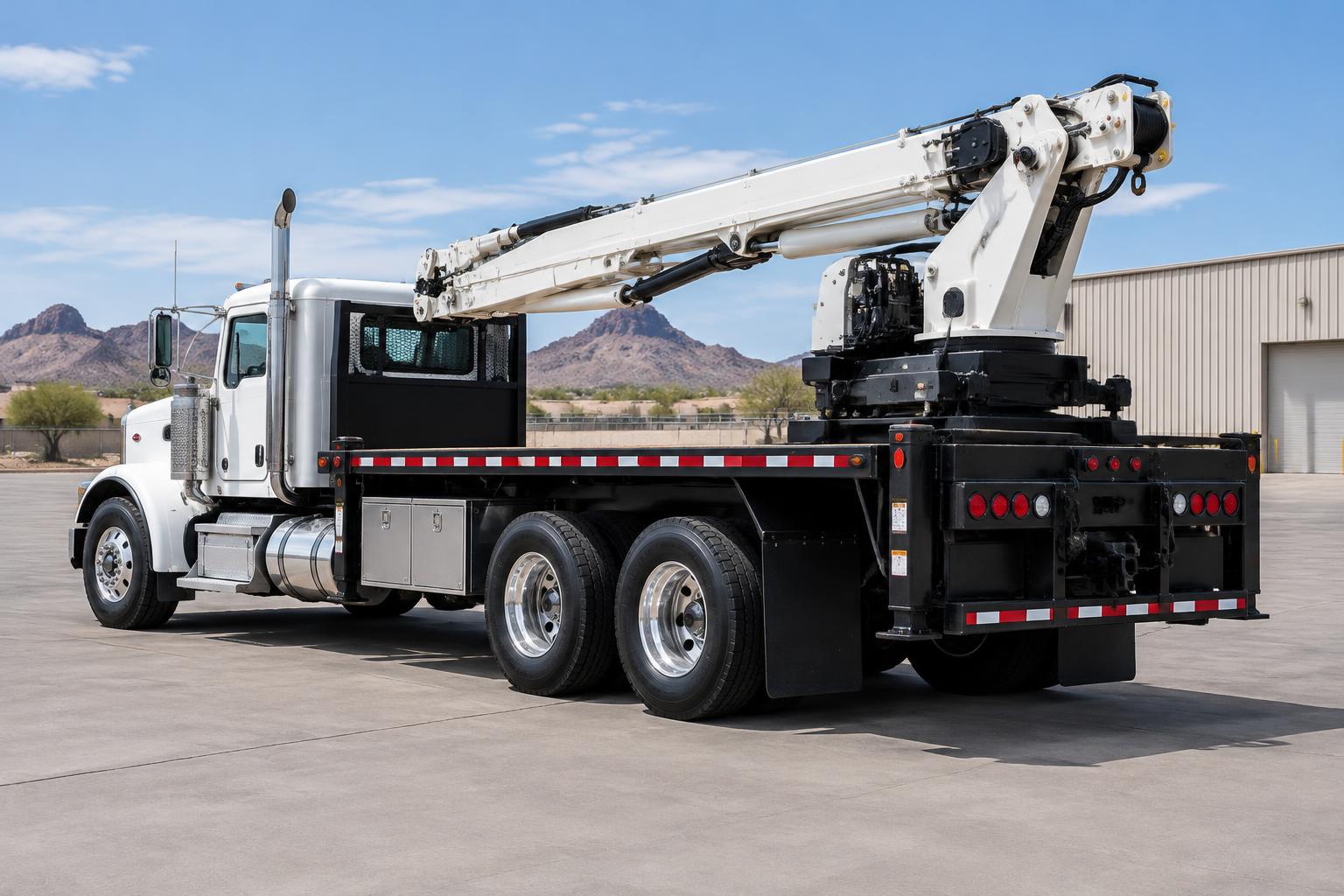
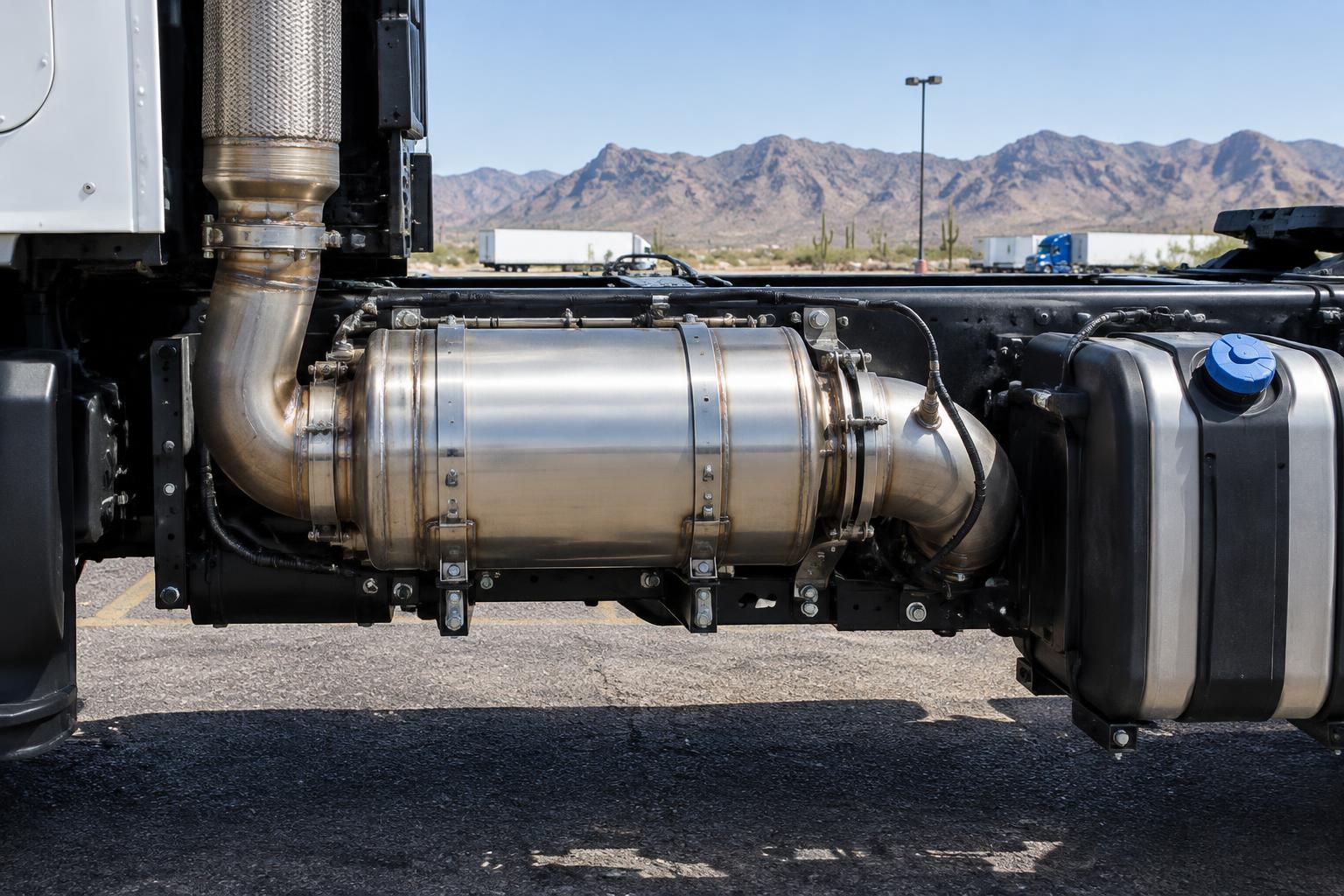
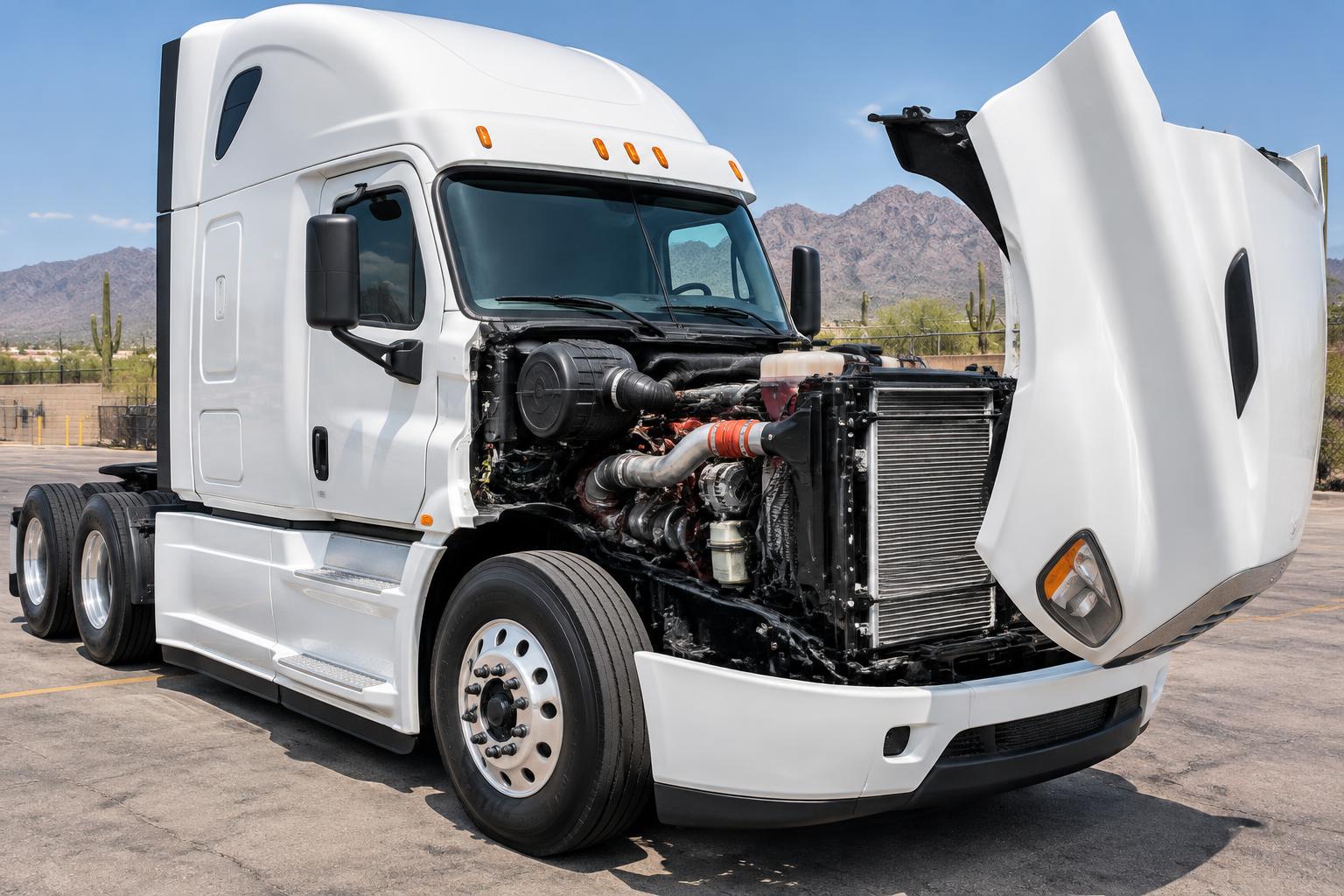
 Illustrative image · not a customer repair photograph
A rising temperature gauge is a warning to act—not a reason to keep pushing to the next delivery. Follow the truck’s warning messages and stop safely when instructed.
Why Phoenix heat exposes cooling problems
An engine cooling system must move heat from the engine into the surrounding air. Extreme ambient heat leaves less room for a marginal system to cope. Heavy loads, slow job-site travel and long periods at low speed can add to the challenge for East Valley contractor trucks.
A derate is reduced engine power commanded by the vehicle’s controls. It can be triggered by different faults; a hot engine is not the only cause. Record the dashboard message and fault codes rather than assuming every loss of power needs the same repair.
Before the next hot-weather shift
Check your engine and vehicle manuals for the correct coolant specification and inspection interval. Do not choose coolant by color alone or mix products without verifying compatibility. Inspect coolant level only using the manufacturer’s procedure with the system cool.
- Look for fresh leaks, dried coolant residue and damaged hoses.
- Inspect belts and visible fan components with the engine off; keep clear of fans that can start unexpectedly.
- Look for debris blocking the radiator and other cooling-stack surfaces. Use the manufacturer’s cleaning method.
- Track temperature changes under similar loads instead of waiting for a shutdown warning.
- Have recurring coolant loss, fan faults or overheating diagnosed before dispatch.
If the temperature climbs on I-10 or Loop 202
Reduce load only as the operator’s manual allows and move to a safe place if the vehicle instructs you to stop. Follow the specific shutdown or cooldown procedure for your engine. If you cannot safely leave a live traffic lane, call 911 for the immediate hazard.
Never remove a radiator or pressurized coolant cap while the system is hot. Hot coolant and steam can cause severe burns. Do not pour cold liquid into an overheated system or resume driving simply because the gauge briefly drops.
- Send the truck make, engine model and exact dashboard warning.
- Share the nearest exit, direction of travel and a safe location pin.
- Describe any steam, leaks, coolant smell or recent cooling-system work.
- Ask for diagnosis before replacing parts based on a warning light alone.
Plan cooling checks around your fleet schedule
For Phoenix, Chandler, Mesa and Gilbert fleets, checking cooling-system concerns at the yard can avoid discovering them at a delivery site. Blackwell & Son Diesel provides mobile heavy-duty diagnostics and repair across the Phoenix metro. Call with your location and symptoms to confirm scheduling and the work needed.
This guide is general preparation, not a substitute for your truck’s operator manual or an inspection. The photograph is illustrative and does not document a Blackwell & Son repair call.
Sources & further reading
Let’s talk about your truck.
Send your vehicle details, location and the work you need.
Request service